
Are you a fan of animals and their playful antics? If so, you’re in for a treat! From the chirping of birds to the purring of cats, animals have a unique way of communicating through onomatopoeia.
Onomatopoeia is the use of words that imitate the sounds they represent. Think of the buzzing of bees, the quacking of ducks, or the barking of dogs. These words add a fun and lively element to our language, bringing the sounds of nature to life.
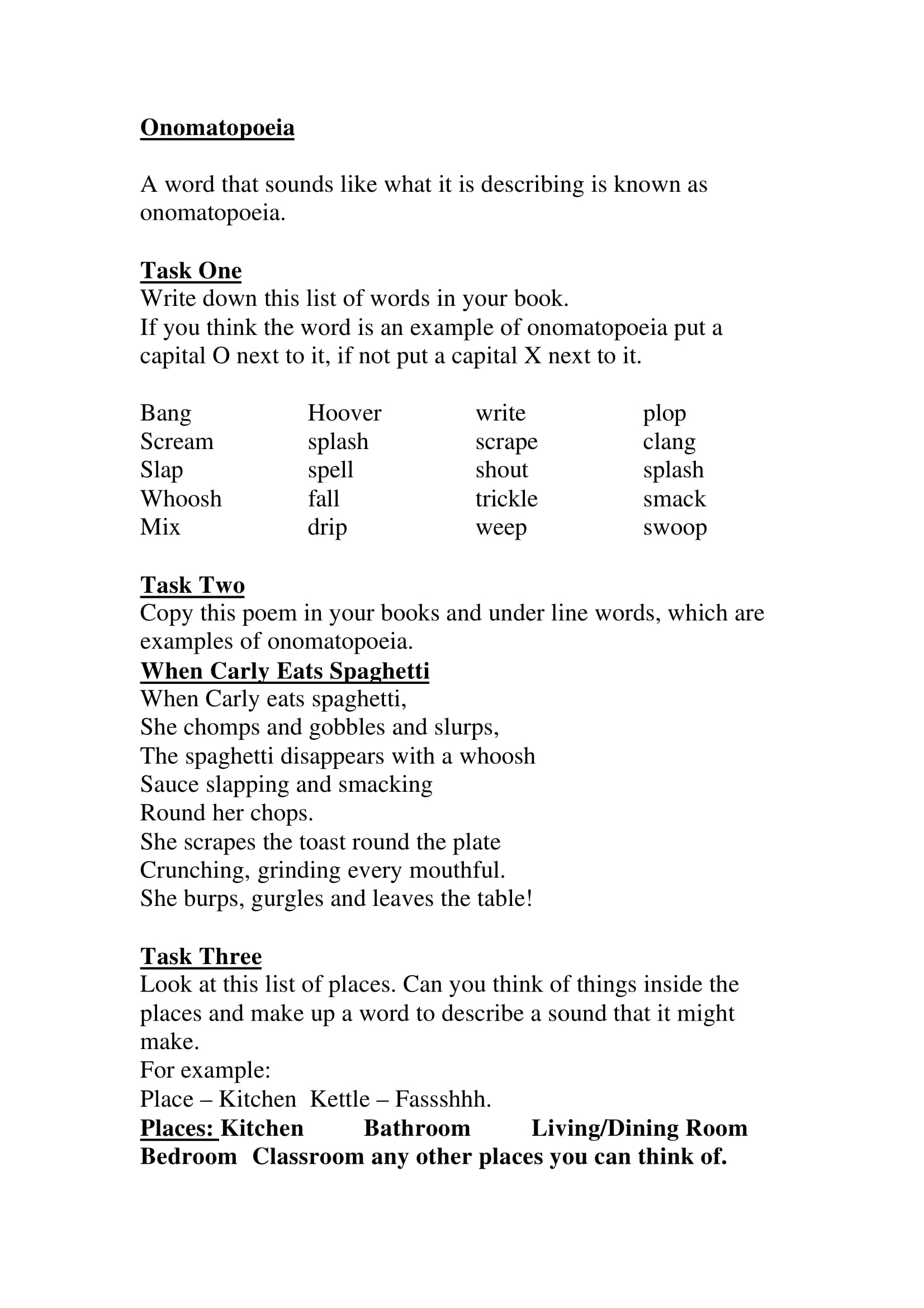
a sentence using onomatopoeia
From Meow to Woof: Exploring Animal Sounds
When you hear a cat meow or a dog bark, you can’t help but smile at the way these sounds mimic the real thing. Animals use onomatopoeic sounds to express their emotions, communicate with each other, and even ward off potential threats.
Next time you’re in the great outdoors, take a moment to listen to the symphony of sounds around you. From the rustling of leaves to the chirping of crickets, nature is full of onomatopoeic wonders waiting to be discovered.
Whether you’re a nature lover, an animal enthusiast, or simply someone who enjoys the beauty of language, onomatopoeia is a fascinating aspect of communication that adds depth and richness to our everyday interactions.
So, the next time you hear a bird’s song or a frog’s croak, take a moment to appreciate the onomatopoeic nature of these sounds. They are not just noises but a form of expression that connects us to the world around us in a unique and magical way.
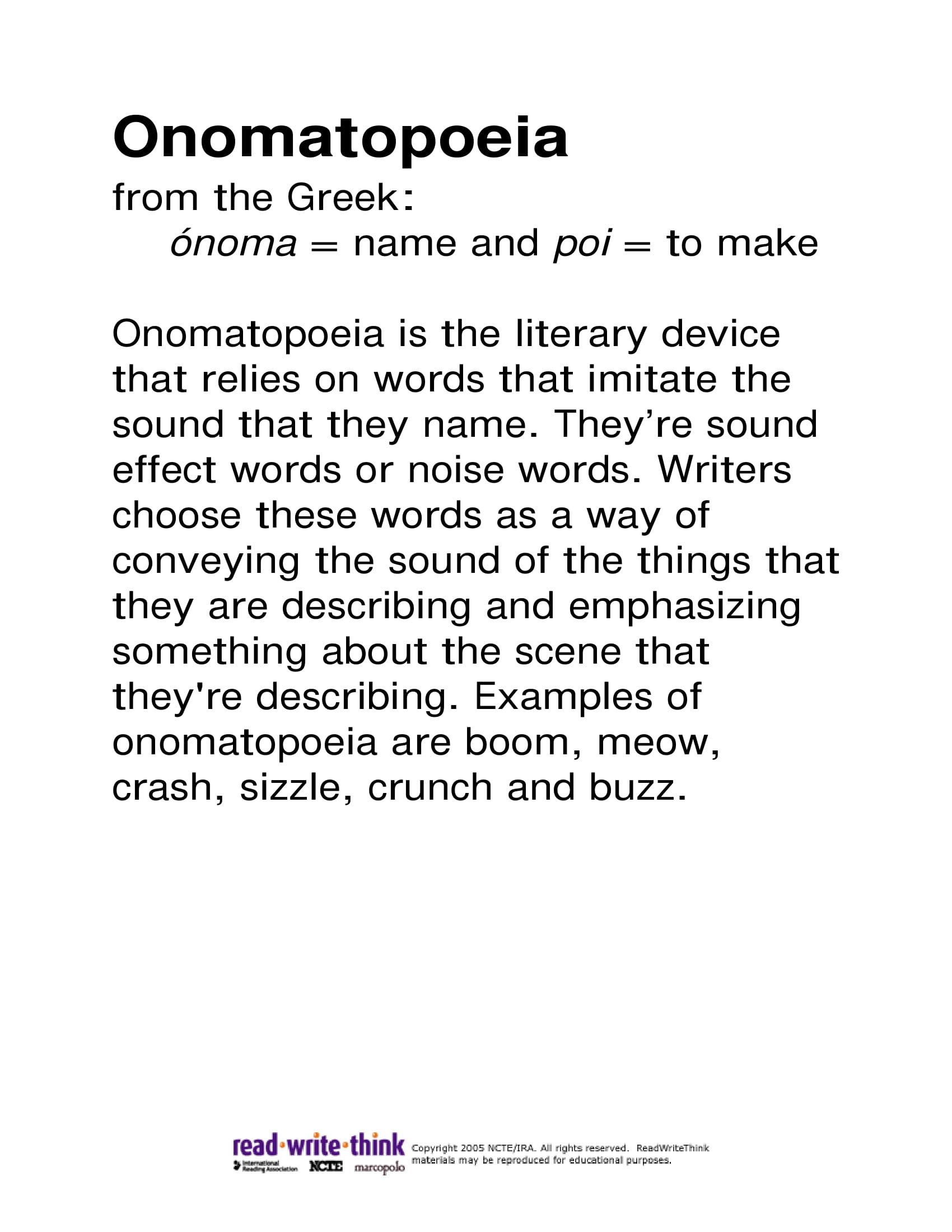
9 Onomatopoeia Examples
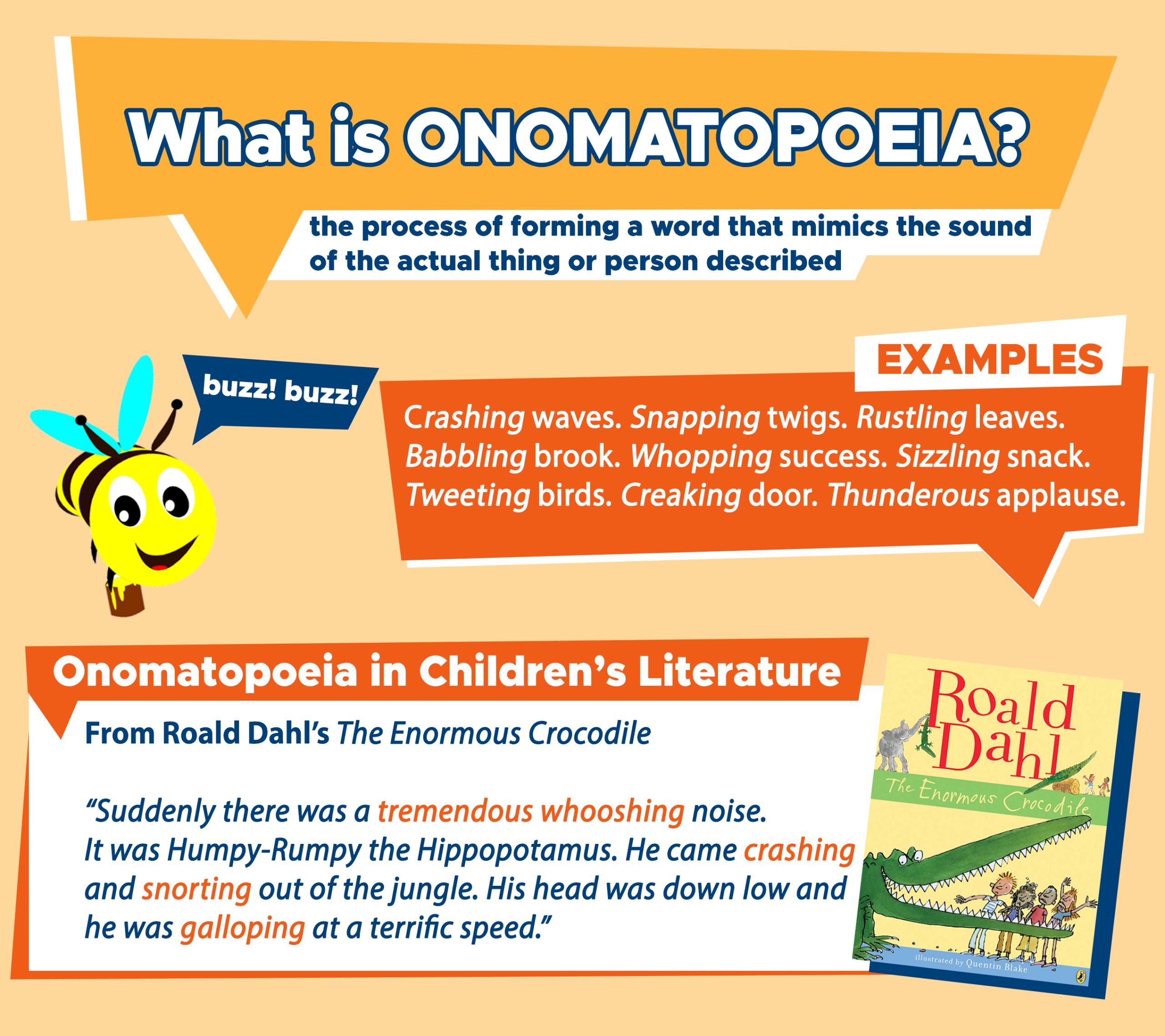
Onomatopoeia A Word That Mimics A Sound Curvebreakers
Onomatopoeia Examples In A Sentence Kirsten s Kaboodle
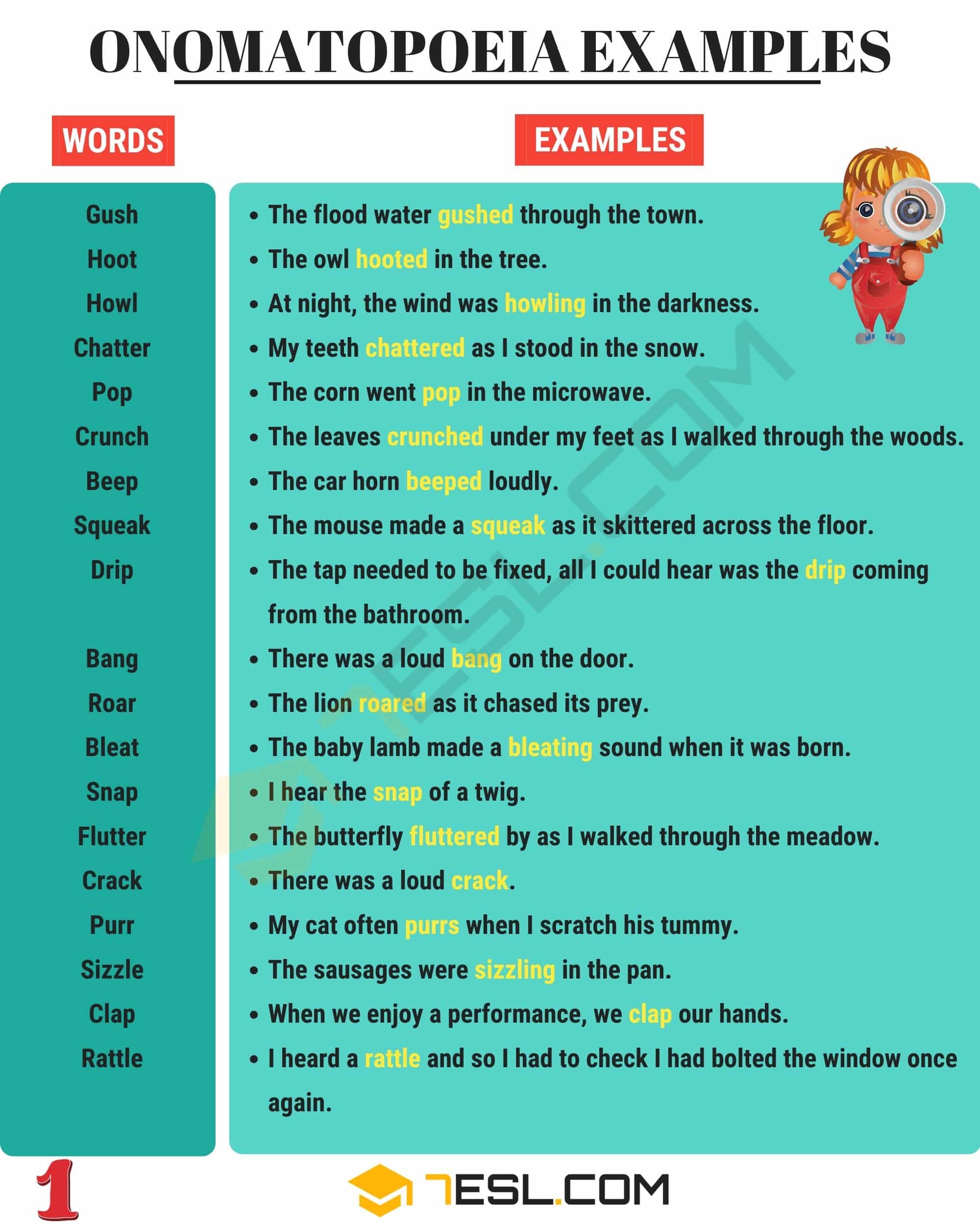
Onomatopoeia 100 Onomatopoeia Words In English 7ESL