
Irregular verbs and regular verbs are essential parts of the English language. Understanding the difference between them can help you improve your communication skills and use proper grammar in your writing and speaking.
Regular verbs follow a predictable pattern when conjugating in different tenses, such as adding -ed to form the past tense. For example, “walk” becomes “walked” in the past tense. On the other hand, irregular verbs do not follow this pattern and must be memorized individually.
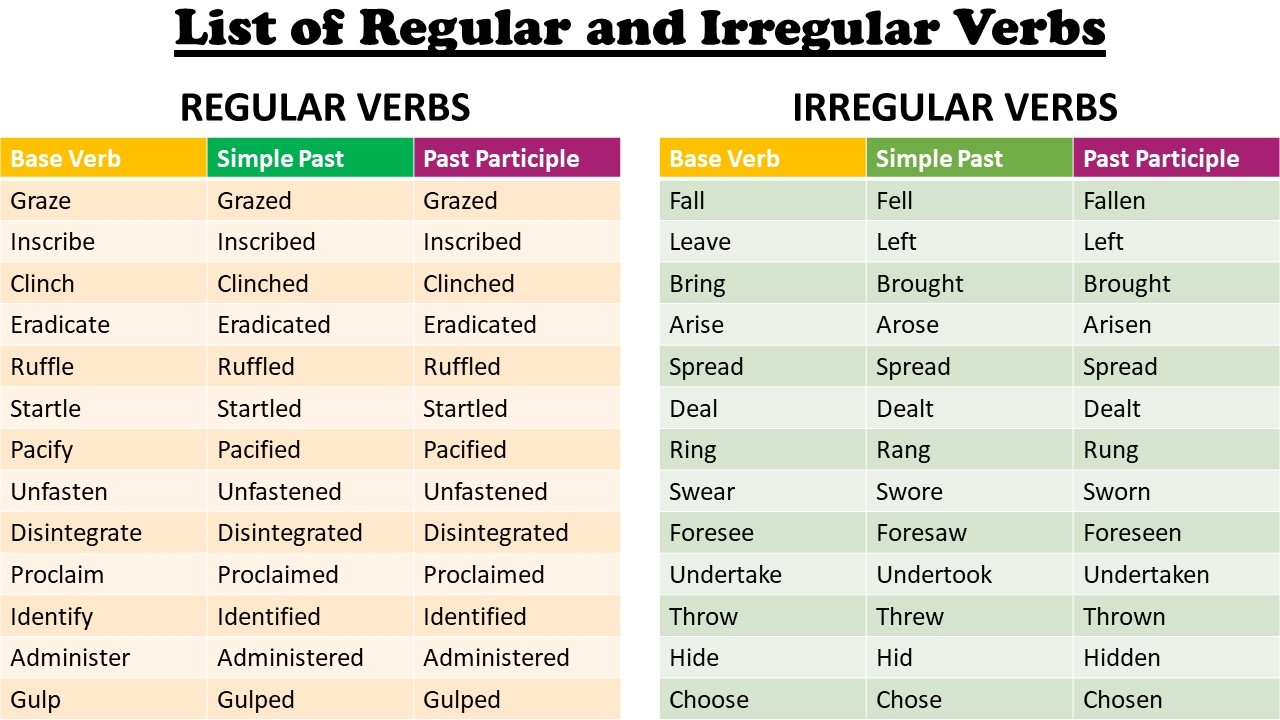
irregular verbs and regular
Mastering Irregular Verbs and Regular Verbs
Learning irregular verbs can be challenging, but with practice and repetition, you can become more comfortable using them correctly. Common irregular verbs include “go-went-gone” and “eat-ate-eaten.”
Regular verbs, on the other hand, are more straightforward to conjugate because they follow a consistent pattern. For example, “play” becomes “played” in the past tense and “will play” in the future tense.
One way to improve your understanding of irregular and regular verbs is to create flashcards or practice quizzes to test your knowledge. By actively engaging with the material, you can reinforce your learning and become more confident in using these verbs correctly.
In conclusion, mastering irregular and regular verbs is a crucial step in becoming proficient in English. By practicing regularly and paying attention to verb forms in your everyday conversations and writing, you can improve your grammar skills and communicate more effectively.
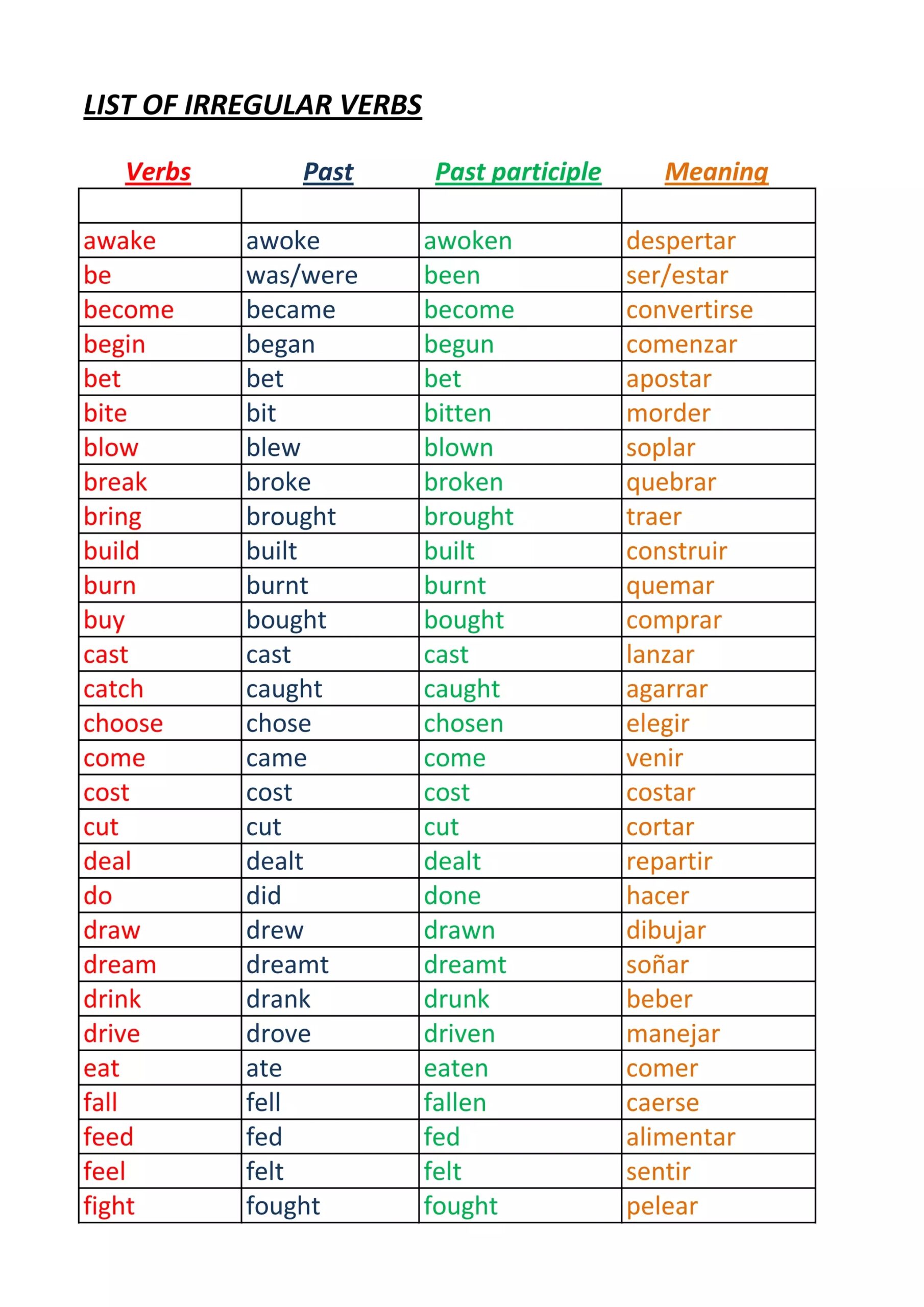
List Of Regular Irregular Verbs PDF
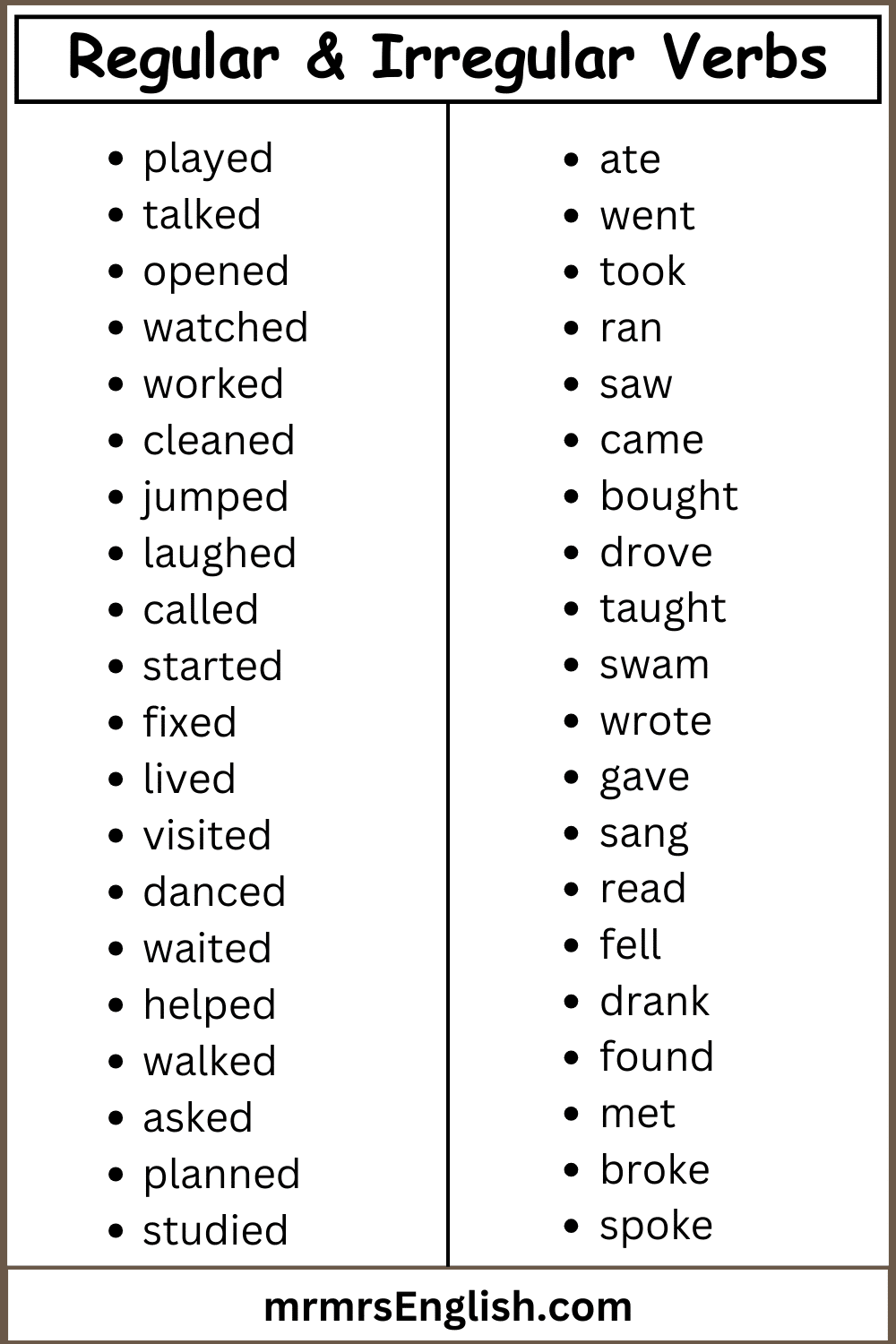
Regular And Irregular Verbs Explained With Definition And Examples MR MRS ENGLISH
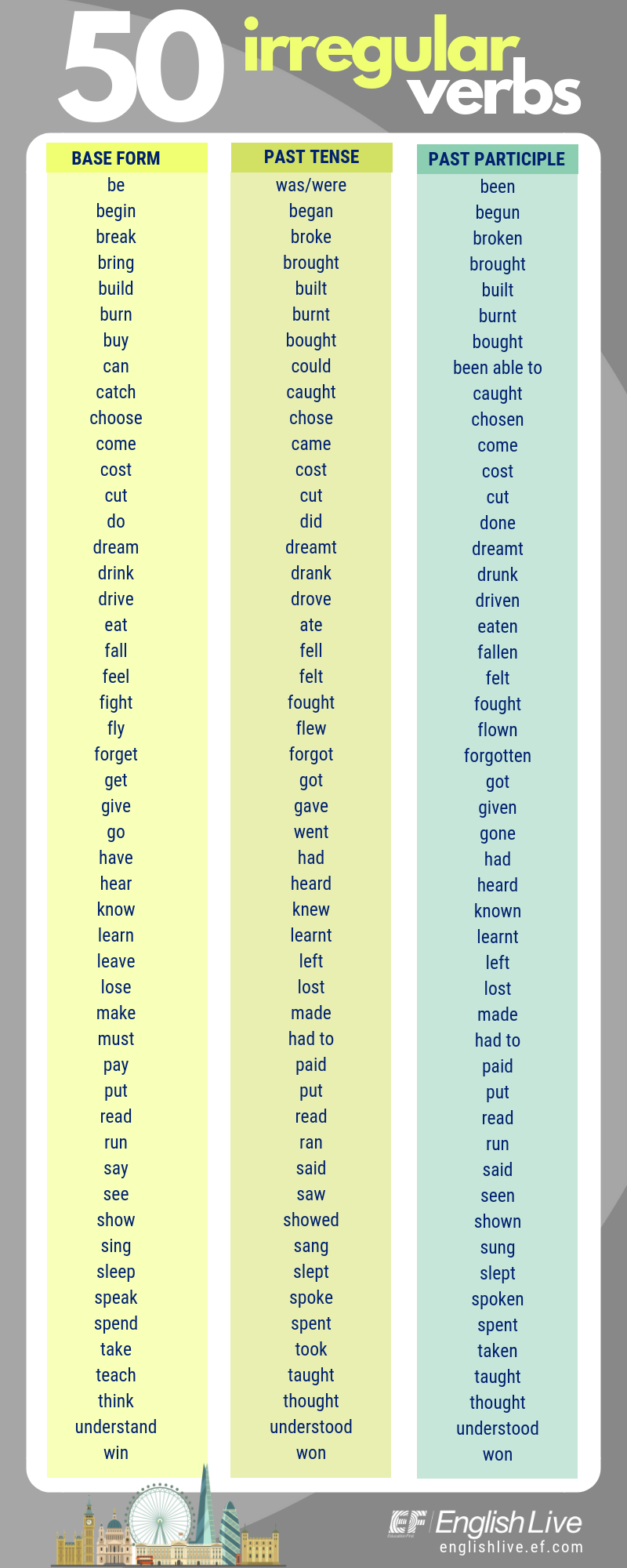
Regular And Irregular Verbs

Regular And Irregular Verb Examples What Is An Irregular Verb ESL Kids World