
Are you curious about the simple present tense? It’s one of the most basic tenses in English that you use to talk about habits, routines, and general truths. Let’s dive into it and explore how to use it correctly.
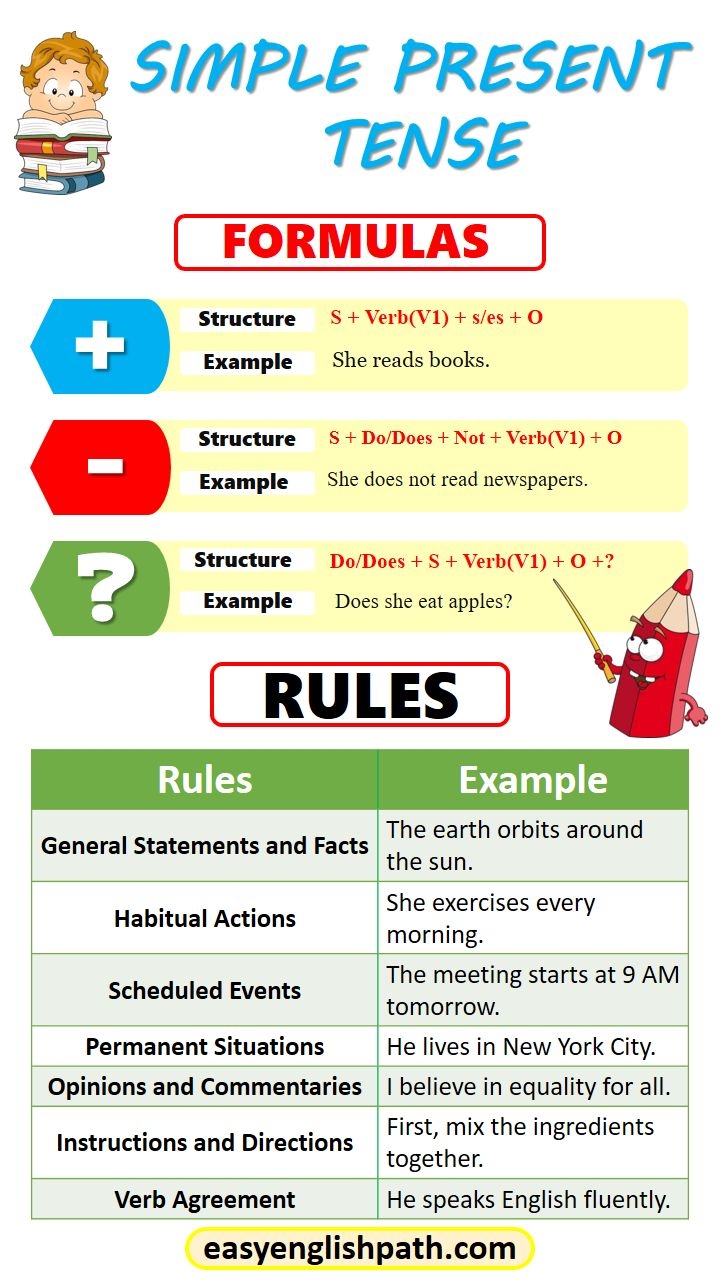
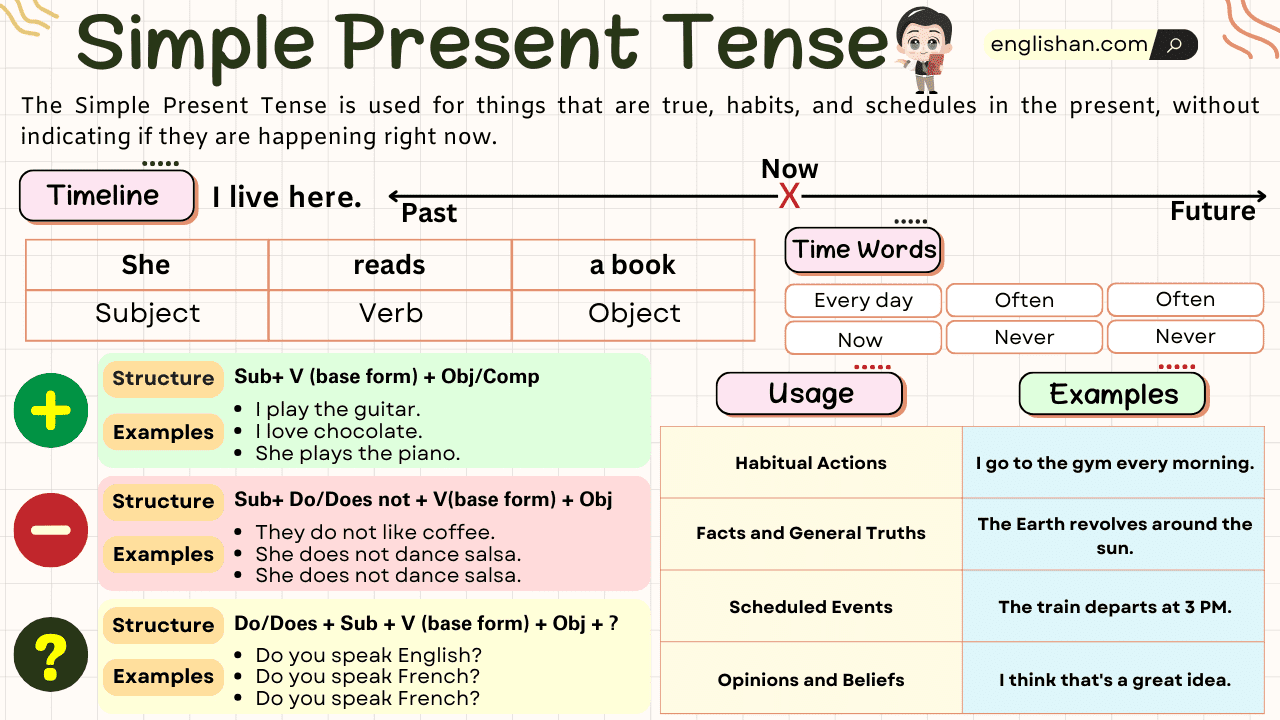
The simple present tense is used to describe actions that happen regularly, like “I eat breakfast every morning.” It’s also used for general truths, such as “The sun rises in the east.” This tense helps us communicate what is happening now or what happens regularly.
tenses simple present tense
Understanding the Simple Present Tense
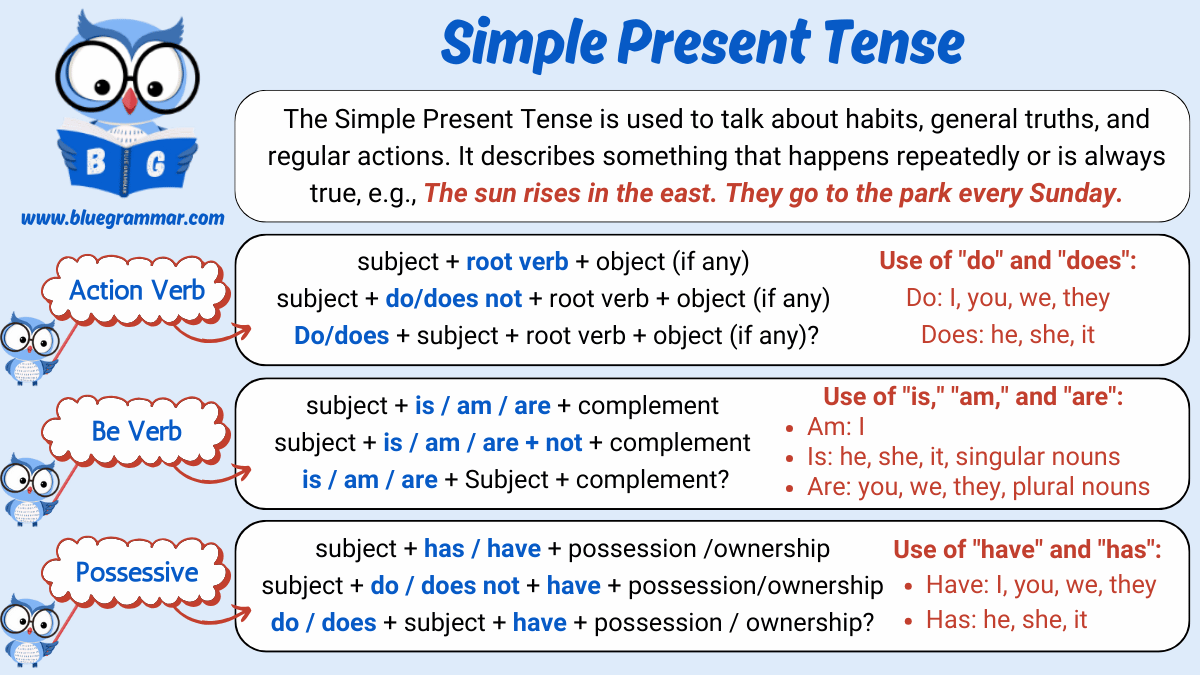
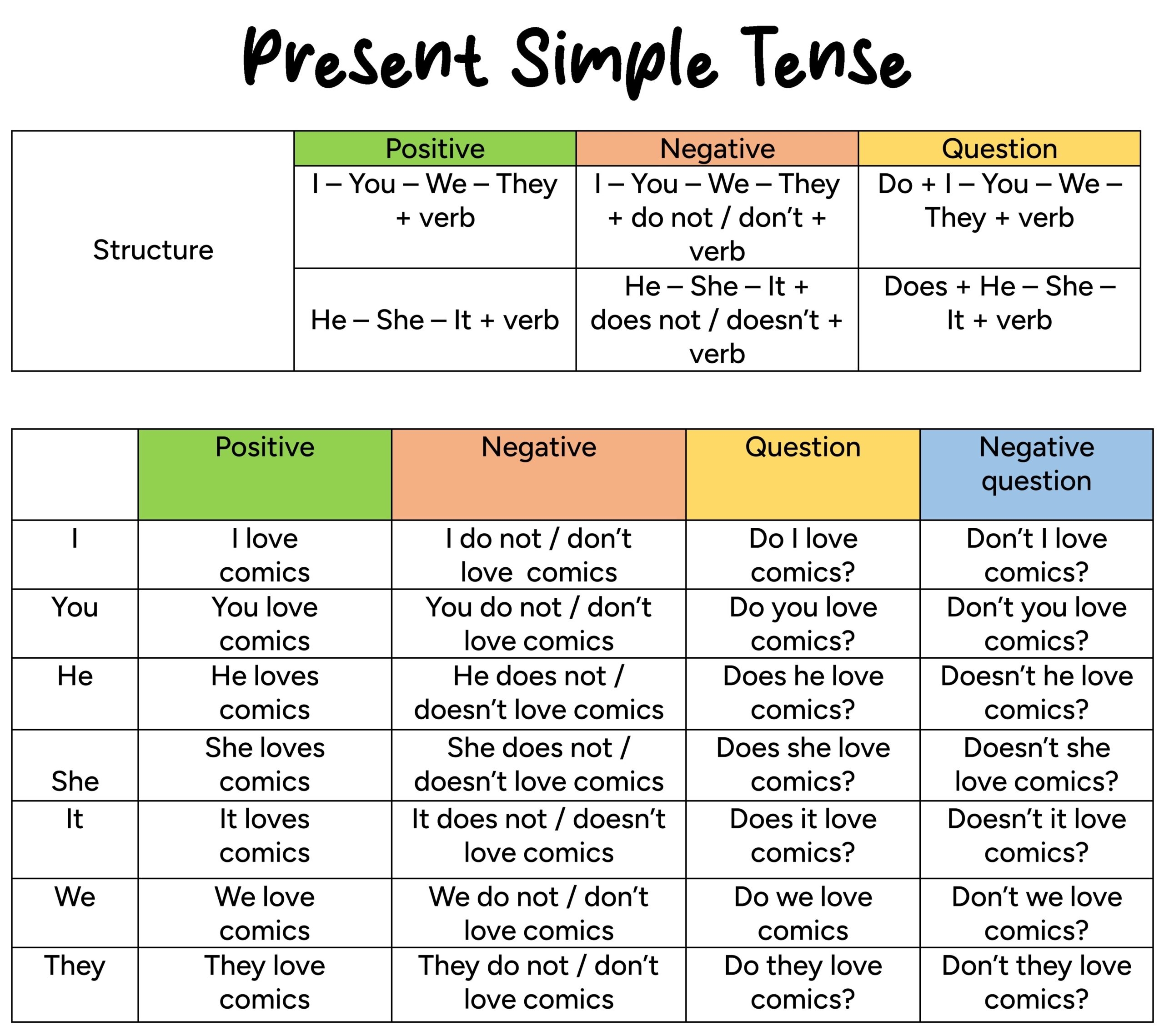
To form the simple present tense, you usually just add an -s to the base form of the verb for third-person singular subjects, like “He works in an office.” For other subjects, you simply use the base form of the verb, as in “They play soccer on weekends.”
It’s important to remember that the simple present tense doesn’t just talk about the present moment but also about recurring actions or habits. For example, “She reads a book every night” shows a routine action. By using this tense, you can convey information clearly and effectively.
When asking questions or making negative statements in the simple present tense, we often use auxiliary verbs like “do” and “does.” For instance, “Do you like ice cream?” or “She doesn’t watch TV often.” These structures help us form questions and negatives in this tense.
In conclusion, the simple present tense is a fundamental part of English grammar that allows us to express actions, habits, and truths in a clear and concise way. By understanding how to use this tense correctly, you can communicate effectively in various situations and contexts.
Simple Present Tense With Examples Rules Usage Englishan
Simple Present Tense Action Verbs Be Verbs Possessive Forms Blue Grammar
Simple Present Tense English For Yourself
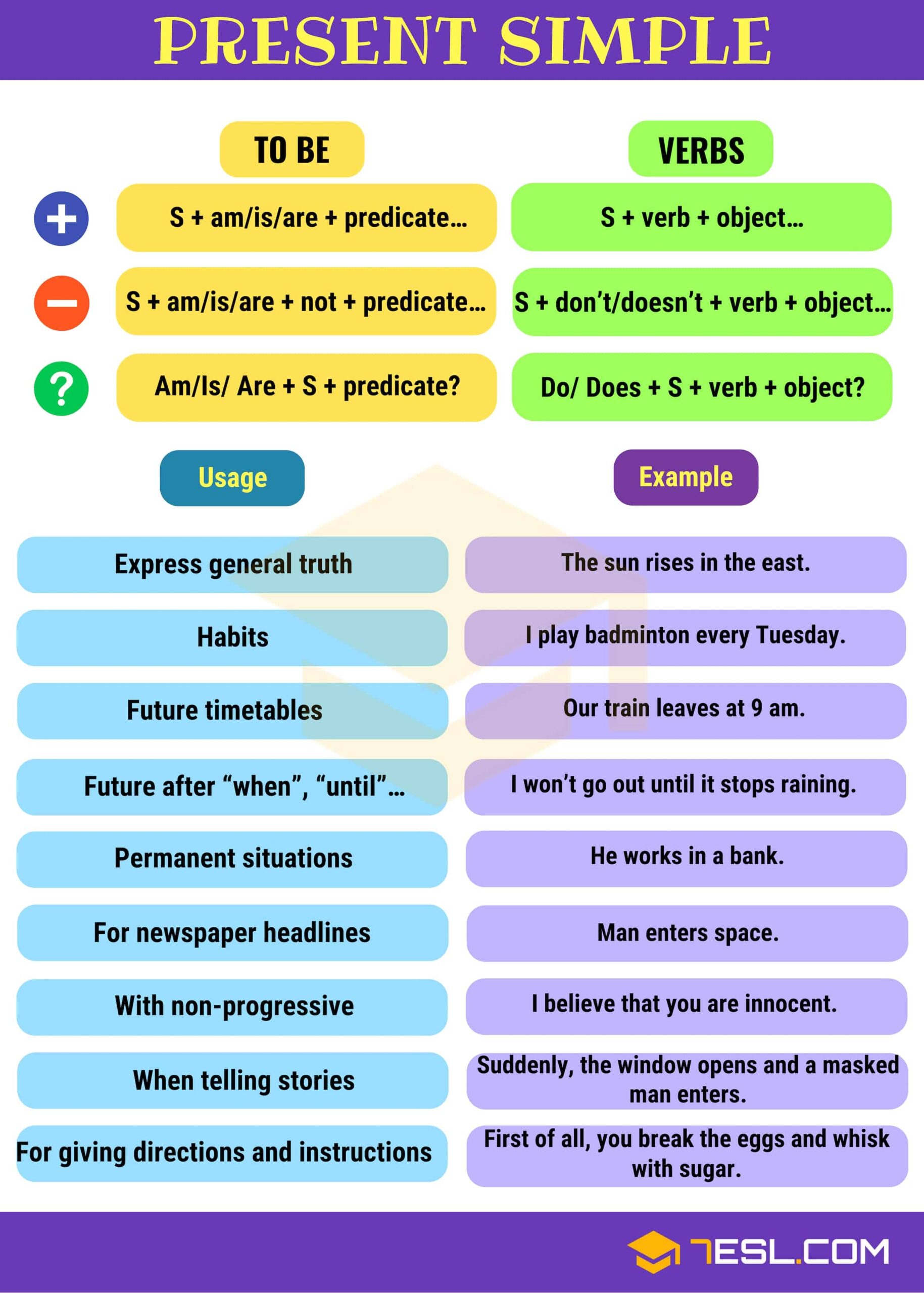
Present Simple Tense Simple Present Definition Rules And Useful Examples 7ESL